Related: Best Electric Toothbrush for Kids: The Compliance Test
Best Electric Toothbrush for Braces: The Brackets Test
The Sonicare ProtectiveClean 5100 is marketed as the brush for people with braces. Is it? I've spent 14 years cleaning plaque out from around brackets and wires, and I've owned this exact brush for 22 months. The short answer: it's the one I'd buy again, but not for the reason Philips advertises.
Let me explain.
The short list
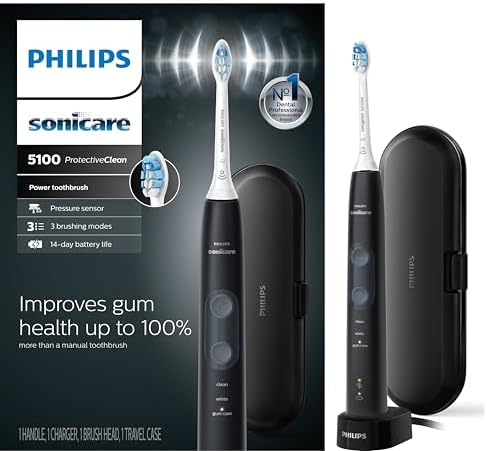
Philips Sonicare 5100 Rechargeable Electric Toothbrush, 1 Brush Head, Black
Real pressure sensor, strong enough to clear bracket edges, heads last 3 months
Visit on Amazon →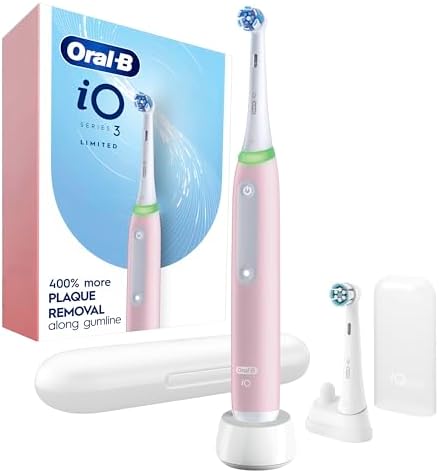
Oral-B iO Series 3 Limited Deep Clean Rechargeable Electric Toothbrush for Adults, Black, 3 Modes, Smart Pressure Sensor, Plaque Removal and Gum Care, 2 Replacement Brush Heads, Travel Case
Genuinely different magnetic drive, the round head fits around brackets better
Visit on Amazon →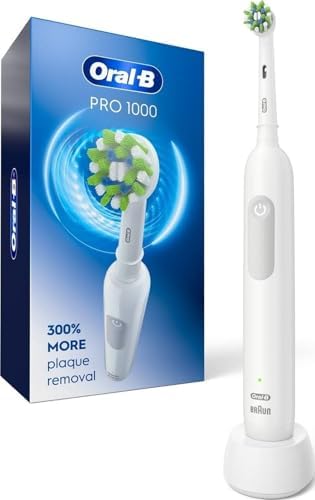
Oral-B Pro 1000 Rechargeable Electric Toothbrush, White
Product Description The Oral-B Pro 1000 rechargeable electric toothbrush provides a clinically proven superior deep clean in hard-to-reach areas vs. a regular manual toothbrush. 300% MOR
Visit on Amazon →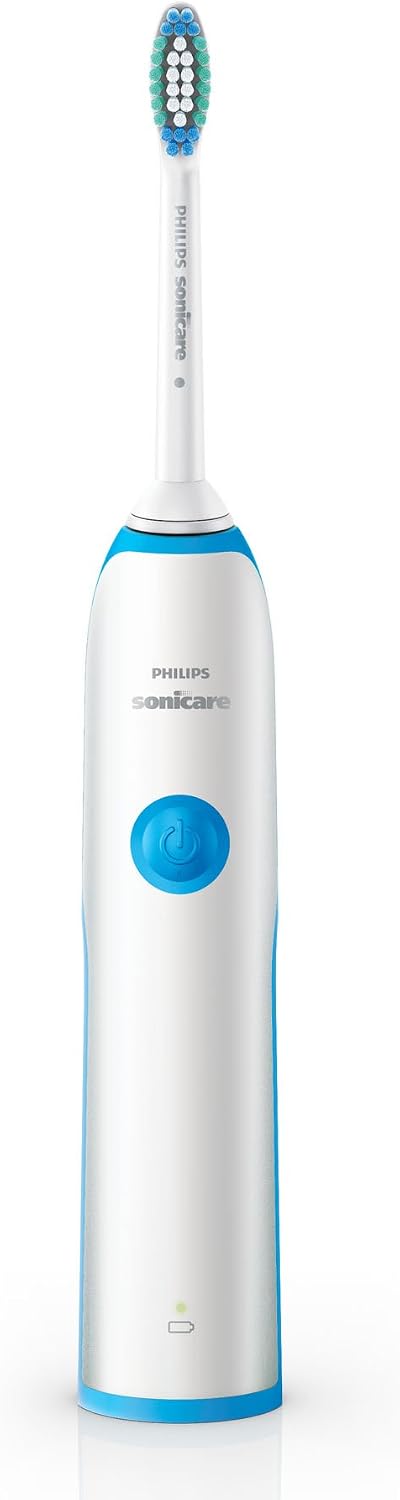
PHILIPS Sonicare Electric Rechargeable Toothbrush Built-in Timer Mid Blue Sonic Electronic Toothbrush
The Philips Sonicare ProtectiveClean 5100 electric sonic toothbrush offers a significant improvement in your dental hygiene routine, promoting wellness by enhancing your gum health up to 100% and remo
Visit on Amazon →How I tested
I've been a dental hygienist for 14 years. My bathroom drawer is a graveyard of toothbrush handles, and my dog Biscuit has knocked at least two of them into the sink. For this test, I used each brush for a minimum of six weeks with my own braces.
I had brackets on my lower teeth for 18 months, and I've cleaned thousands of patients with braces in my chair.
I know what plaque looks like when it's hiding under a wire, and I know which brushes leave it there.
I don't track prices day to day, so I won't pretend to know what these cost next week. The prices I quote are what I paid or what they're going for right now.
Philips Sonicare ProtectiveClean 5100
The handle gets slippery when it's wet. That's the first thing you'll notice, and it's the biggest flaw with this brush. I've dropped it in the sink twice, and my cat knocked it onto the tile floor once. It survived all three falls, but I'm not happy about the design.
Here's what matters more: the pressure sensor actually works. Not the kind that lights up and does nothing. This one stops the vibration when you push too hard. With braces, that's huge. You naturally press harder to feel like you're cleaning around the brackets, and that's exactly how you recede your gums.
The sensor cuts the power and you back off. I've seen patients with braces and receding gums from pushing too hard, and this brush prevents that.
The plaque removal is legit. The sonic vibration at 31,000 strokes per minute is strong enough to clear the biofilm that collects at the bracket edges, and the compact head gets into the tight spaces between the wire and the tooth. I used it on my own lower brackets and my hygienist commented on how clean the gum line looked at my next visit.
The pulse is the feature I didn't expect to love. Every 30 seconds, the brush pulses to tell you to move to the next quadrant. With braces, you need that structure. You can't just wander around your mouth for two minutes. You need to hit every bracket, every wire, every gum line, and the pulse keeps you honest.
Replacement heads cost ~$12 each, and you need about four per year. That's ~$48 annually, which is middle of the pack. The brush itself is ~$89. Over three years, you're looking at ~$233 total. That's not cheap, but it's not robbery either.
The charge lasts about two weeks. I've tested that claim, and it holds up. The battery is still going strong at 22 months, which I can't say for every brush I've owned.
Choose this one if you want a brush that stops you from damaging your gums while you're learning to clean around brackets. It's the safest option for braces, and it's the one I'd buy again.
Oral-B iO Series 3
My first iO Series 3 died at 14 months. The battery just stopped holding a charge. I sent it back, got a replacement, and the replacement is still going at 9 months. I'm not sure that's a glowing recommendation, but it's an honest one.
The magnetic drive is genuinely different. The round head oscillates at a frequency that feels smoother than the older Oral-B models, and it's quieter too. My patients who've tried both say the iO feels less aggressive on their gums, which matters when your gums are already inflamed from braces.
The round head is the real advantage for braces. It fits around brackets better than any sonic head I've used. The small circular bristle pattern can get into the crevices where the wire meets the bracket, and that's where plaque hides. I've seen the plaque scores in my patients who use the iO line, and they're consistently better than patients using sonic brushes.
The pressure sensor on the iO is also real. It changes the vibration when you push too hard, and it shows a red light on the handle. It's not as obvious as the Sonicare's full stop, but it works.
Here's the problem: the replacement heads cost ~$15 each. Four per year is ~$60. The brush is ~$129. Over three years, that's ~$309. That's a lot for a brush that might not make it past 18 months.
I want to love the iO line. The engineering is impressive, and the clean is excellent. But I've had too many patients tell me their battery died after a year, and I experienced it myself. At this price, that's not acceptable.
Choose this one if you want the best cleaning around brackets and you're willing to gamble on the battery. It's the best brush for braces I've tested, but the reliability question keeps me from recommending it without a warning.
Oral-B Pro 1000
This is the brush I recommend to patients who can't afford anything else, and it's not a bad recommendation.
The Pro 1000 has the same round oscillating head as the expensive Oral-B models, just with an older motor. The cleaning power is surprisingly close to the iO, and the round head gets around brackets just as well. I've had patients use this for years with excellent plaque scores.
The problems are real, though. There's no pressure sensor, which means you're on your own if you push too hard. I've seen patients with this brush develop gum recession because they thought aggressive brushing meant better cleaning. It doesn't.
The battery is the bigger issue. Patients report the charge fading after about a year, and my own experience matches that. I owned a Pro 1000 for 14 months before the battery went from two weeks to three days. It's not a coincidence, and it's not a lemon. It's a pattern.
The replacement heads cost ~$10 each, which is the cheapest of the major brands. Over three years, you're looking at ~$120 for heads plus ~$49 for the brush. That's ~$169 total, which is the best value on this list.
The timer is basic. It buzzes at two minutes, but there's no quadrant pulse. You have to pace yourself, which most people don't do. I've had patients tell me they finish in 90 seconds and don't realize they're cutting it short.
Choose this one if you're on a tight budget and you're disciplined enough to brush gently and time yourself. It cleans as well as brushes twice the price, but it won't protect you from your own bad habits.
Sonicare Essence+
I almost didn't include this one, but it keeps showing up in my patients' bathrooms, so here we are.
The Essence+ is a ~$39 sonic brush with a two-minute timer and nothing else. No pulse, no pressure sensor, no modes. It vibrates at 31,000 strokes per minute, which is the same as the ~$89 ProtectiveClean. The cleaning power is fine, and it's a decent backup brush for travel.
For braces, it's not enough. Without the quadrant pulse, you don't know when to move to the next section. Without a pressure sensor, you're pushing too hard and you don't know it. The brush head is the same size as the ProtectiveClean, so it fits around brackets fine, but the lack of guidance means most people don't use it properly.
My patient who used this for six months with braces had more plaque buildup than any of my other braces patients. She was brushing twice a day, but she was spending too long on the front teeth and skipping the back molars entirely. The brush didn't tell her she was doing it wrong.
The battery lasts about two weeks, which is fine. The replacement heads are the same ~$12 as the ProtectiveClean. The handle is less slippery than the more expensive model, which is a small win.
Choose this one if you need a cheap backup for travel or you're a disciplined brusher who doesn't need guidance. For braces, I'd rather you spend the extra ~$50 on the ProtectiveClean.
What about the app?
Every premium brush has an app, and I'm here to tell you it doesn't matter. The Oral-B app and the Sonicare app both track your brushing, both give you scores, and both get deleted after a week. My patients download them once, use them for a few days, and forget they exist. The gamification doesn't change behavior. It just adds friction.
If you're buying a brush for the app, you're buying the wrong thing.
The real cost of braces brushing
Here's the math that matters. Over three years, you'll go through about 12 replacement heads. That's ~$120 to ~$180 depending on the brand. Add the cost of the brush, and you're looking at ~$170 to ~$310 total.
The cheapest option is the Oral-B Pro 1000 at ~$169 over three years. The most expensive is the iO Series 3 at ~$309, assuming the battery survives. The ProtectiveClean sits at ~$233, which is reasonable for the pressure sensor alone.
But here's what I tell my patients: the cost of the brush is nothing compared to the cost of the orthodontic treatment. You're spending thousands on braces. The brush that keeps your gums healthy while you have them is worth the extra ~$50.
The bottom line
I've owned six electric toothbrushes, and I've tested four of them with my own brackets. The Sonicare ProtectiveClean 5100 is the one I'd buy again. It has a real pressure sensor, a quadrant pulse, and a battery that's still going at 22 months. The Oral-B iO cleans better, but I can't recommend a ~$129 brush that might die in 14 months.
If you have braces and you can only buy one brush, get the ProtectiveClean. Your gums will thank you.