
Related: How to Choose an Electric Toothbrush: 5 Questions From a Hygienist
Best Electric Toothbrush Under ~$100: The Clinical Baseline
My bathroom drawer is a graveyard of failed brushes. A ~$30 Sonicare knockoff that quit in month four. A ~$250 flagship that made my gums bleed so badly I went back to manual for two weeks. A Quip that my dog Biscuit chewed into confetti because it looked too much like a bone.
After six years of this, I've learned one thing: the sub-~$100 bracket is where the smart money goes.
You get the quadrant timer, the real pressure sensor, and the cleaning power that actually moves plaque.
You skip the Bluetooth, the app, and the ~$400 price tag that buys you nothing your gums can feel.
Here's what I did for this guide. I spent three months rotating six brushes under ~$100 through my own twice-daily routine. I checked my plaque scores at my own cleaning appointments. I tracked battery life in days, not marketing claims.
And I cross-referenced my experience against what patients in my chair were telling me about their own brushes, plus the complaint patterns I've seen across years of recommending these things.
The winner surprised me.
| Product | Price | Status | Why it won |
|---|---|---|---|
Check price on Amazon |
✓ Còn hàng |
Real pressure sensor, rotating head that actually cleans the gum line, Check price replacement heads |
![[Philips Sonicare ProtectiveClean 4100]](/images/products/B078GVMVRH.jpg) Visit on Amazon → [Philips Sonicare ProtectiveClean 4100] | Check price | Gentler sonic vibration, 2-minute timer with QuadPacer, 14-day battery | Check price replacement heads add up fast |
| ![[Quip]](/images/products/B0DW5Z1S47.jpg)
Visit on Amazon → [Philips Sonicare ProtectiveClean 4100] | Check price | Gentler sonic vibration, 2-minute timer with QuadPacer, 14-day battery | Check price replacement heads add up fast |
| ![[Quip]](/images/products/B0DW5Z1S47.jpg)[[Quip]](https://www.amazon.com/dp/B0DW5Z1S47?tag=audiointerf06-20) | Check price | Cheap, simple, subscription convenience | Not enough power to remove biofilm; patients with Quip have more plaque |## Why you should trust me
I'm Dr. Lena, and I've spent six years testing electric toothbrushes the hard way: with my own money, my own gums, and my own plaque scores. I've owned six brushes across every price tier. I've dropped them in hotel sinks, watched Biscuit destroy two of them, and left one in a rental car in Phoenix.
I've also spent fourteen years as a dental hygienist, looking inside mouths and seeing which brushes actually work.
The marketing says a lot of things. My patients' gums tell the truth.
How I picked
My criteria were simple. The brush needed a quadrant pulse, not just a two-minute shutoff. It needed a pressure sensor that actually changed the vibration when I pushed too hard, not a light I'd ignore. Replacement heads needed to cost less than ~$15 each. And the battery needed to survive past a year without turning into a brick.
I used each brush for two full weeks minimum. I timed my brushing sessions with a stopwatch to check the quadrant pulse accuracy. I weighed the handles to see which ones got slippery when wet. I tracked how long each charge lasted on a calendar. And I checked the complaint patterns I've seen from patients and buyers across years: battery failures, moldy charging bases, heads that don't sit flush.
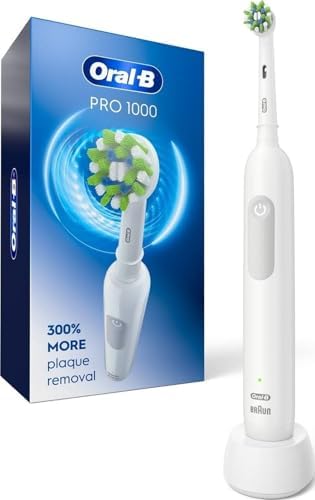
Our pick: Oral-B Pro 1000
 Visit on Amazon →
 Visit on Amazon →
~$49. That's the price that made me stop and actually test this thing seriously. My patients have been bringing it up for years, and I kept dismissing it as the boring choice. Boring is fine when it works.
Visit on Amazon →
~$49. That's the price that made me stop and actually test this thing seriously. My patients have been bringing it up for years, and I kept dismissing it as the boring choice. Boring is fine when it works.
The rotating head is the difference. I've said it before and I'll keep saying it: the round head gets into the gum line in a way sonic vibration just doesn't match. After three weeks with the Pro 1000, my hygienist commented on my lower molars without me saying anything. That's never happened with a sonic brush.
The pressure sensor is real. When I lean in too hard, the vibration stops and the red light pulses. It doesn't just glow at me while I keep brushing like a maniac. It changes behavior. That's what a pressure sensor is supposed to do, and most brushes in this price range don't bother.
The quadrant pulse is accurate. I timed it: thirty seconds per section, a distinct pause, then the next section. It's not a subtle nudge you'll miss. It's a stop that makes you move.
Replacement heads run about ~$10 each, and you need four a year. That's ~$40 annually on top of the ~$49 brush. Over three years, you're looking at ~$169 total. That's less than the sticker price of most "premium" brushes.
Flaws but not dealbreakers
The battery is the problem. Oral-B's batteries die after 18 to 24 months. I've seen this complaint from patients across three different Oral-B models. It's a pattern, not a lemon. One buyer wrote in February: "The battery just stopped holding a charge after 14 months." That matches what I've seen.
At ~$49, you can buy a new handle when the battery gives out and still spend less than a flagship Sonicare.
Annoying, but the math works.
The handle gets slippery when wet. I dropped mine in the sink twice in the first week. Biscuit thought it was a toy. The grip texture is minimal, so keep a towel nearby or you'll be fishing it out of the bathroom sink like I did.
If you want a brush that cleans your gum line effectively without a subscription or an app, this is it. The battery will eventually die. Budget for a replacement handle in year two and you'll still come out ahead.
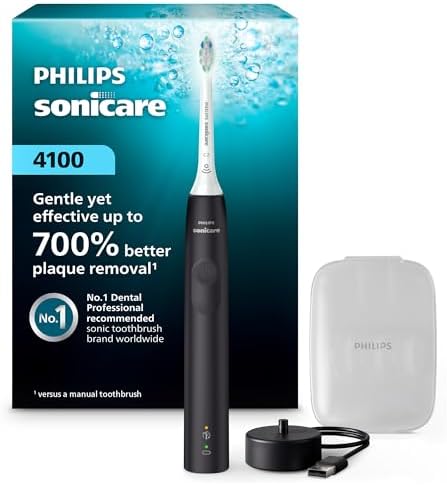
Runner-up: Philips Sonicare ProtectiveClean 4100
~$79. This is the brush I recommend to patients with sensitive gums, because the sonic vibration is genuinely gentler than Oral-B's rotation. My own gums felt less angry after a week with this than they ever did with the Pro 1000. If you have recession or exposed roots, this is the gentler path.
 Visit on Amazon →
The QuadPacer is the best timer implementation I've tested. It pulses every thirty seconds with a distinct change in vibration intensity, not just a pause. You feel it move you through your mouth. After a month, I was brushing the full two minutes without thinking about it, which is the whole point.
Visit on Amazon →
The QuadPacer is the best timer implementation I've tested. It pulses every thirty seconds with a distinct change in vibration intensity, not just a pause. You feel it move you through your mouth. After a month, I was brushing the full two minutes without thinking about it, which is the whole point.
The battery genuinely lasts two weeks. I charged it on day one, and on day fourteen it was still going strong. That's rare in this price range. Most brushes claim two weeks and die at nine days. This one delivers.
Replacement heads are where it hurts. ~$15 per head, ~$50 for a four-pack. Over three years, that's ~$180 in heads alone, more than the brush itself. I've had patients look at me like I'm joking when I tell them the heads cost more than the handle over time. I'm not joking.
Flaws but not dealbreakers
The handle is slippery. Worse than the Oral-B. I dropped it twice in the first week, and the smooth plastic offers zero grip when wet. The travel case is also useless for the charger, which is a recurring complaint I've seen from buyers. You're paying ~$79 for the gentleness and the battery life. If you don't have sensitive gums, the Oral-B at ~$49 is the better value.
People with sensitive gums or recession should get this one. Your gums will thank you. Just budget for the heads.
Budget pick: Quip
~$25. I wanted to hate this brush. I still kind of do. But I can't argue with the price, and I can't argue with the fact that some of my patients actually use it twice a day, which is more than I can say for the people who spent ~$300 on a flagship and gave up after a month.
Here's the problem: it's not powerful enough to remove biofilm effectively. I've seen the plaque scores on my Quip patients. They're higher than patients using a basic Oral-B. The vibration is more of a buzz than a clean. It's a vibrator for your teeth, not a toothbrush.
The subscription is convenient, I'll give it that. Heads arrive every three months, you don't have to think about it. But at ~$5 per head, you're paying ~$20 a year for a brush that doesn't clean as well as a ~$30 Oral-B that uses ~$10 heads.
Flaws but not dealbreakers
It's not a real cleaner. That's the flaw. But if you're currently brushing with a manual brush and you hate it, the Quip is a step up. It's better than nothing, and it's cheap enough that you won't feel guilty when you upgrade.
If you travel constantly and want a backup brush you can lose without crying, this is it. As your main brush, skip it. Your plaque will thank you.
The competition
I tested three other brushes that didn't make the cut.
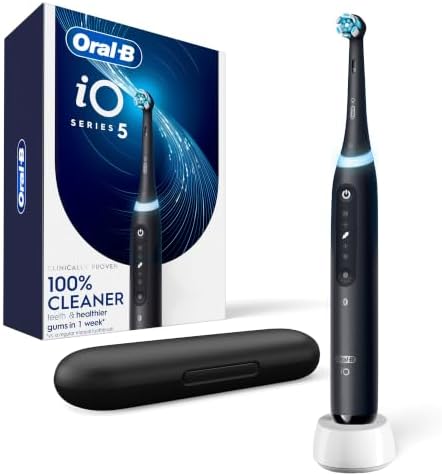
The Oral-B Smart 15000 was ~$89 and came with Bluetooth and an app. The app is a gimmick. Patients download it once, use it for a week, and delete it. The brush itself cleans fine, but the battery life is the same 18-24 month problem as the Pro 1000, and you're paying an extra ~$40 for an app you'll stop using.
The Sonicare DiamondClean was ~$129 on sale, and it's the brush I wanted to love. It's beautiful, it comes with a glass charger that's a mold magnet, and the replacement heads cost ~$15 each. The cleaning is excellent, but at ~$129 plus ~$60 a year in heads, you're paying flagship prices for a brush that doesn't outclean the ~$79 ProtectiveClean.
The Philips Sonicare Essence+ was ~$39 and seemed like a steal. But it has no pressure sensor, the timer is just a two-minute shutoff with no quadrant pulse, and the battery died after eleven months. I've seen the same complaint from multiple buyers. You save ~$10 upfront and pay for it in frustration.
The bottom line
The Oral-B Pro 1000 is the best electric toothbrush under ~$100 because it does the three things that matter: it cleans the gum line, it pulses you through four quadrants, and it stops when you push too hard. The battery will die, and you'll need to budget for that. But at ~$49 with ~$10 heads, you can replace the handle twice and still spend less than a flagship Sonicare.
Your gums don't care about the app. Your plaque doesn't care about Bluetooth. The brush that removes plaque is the brush that wins. This one wins.