Related: The 7 Best Electric Toothbrushes of 2026, Checked by a Hygienist
Well, the ~$30 toothbrush aisle is a liar.
Not intentionally, but it's still lying. Every box screams "CLINICAL WHITENING" and "DEEP CLEAN" and "5 MODES" at a price point that mathematically shouldn't be able to deliver any of it. I've been a dental hygienist for fourteen years, and I've spent six of those buying and living with these budget brushes so my patients don't have to gamble their gum line on a gamble.
I've owned six budget electrics in that time. My dog Biscuit has destroyed two of them. I've dropped one in a hotel toilet in Vegas and fished it out with a pair of tongs because I wasn't about to pay ~$40 for a replacement at the gift shop.
I've seen what happens in mouths when people use these things for six months, and I've seen what happens when they give up and go back to a manual because the brush died or the head cost more than the handle.
Here's the thing about the ~$30 line in the sand: it's the exact price point where a brush stops being a toy and starts being a tool. Below it, you're buying vibration and hope. At it, you're getting a real motor, a real timer, and a brush head that actually does something.
But you still have to pick the right one. And most of them are still bad.
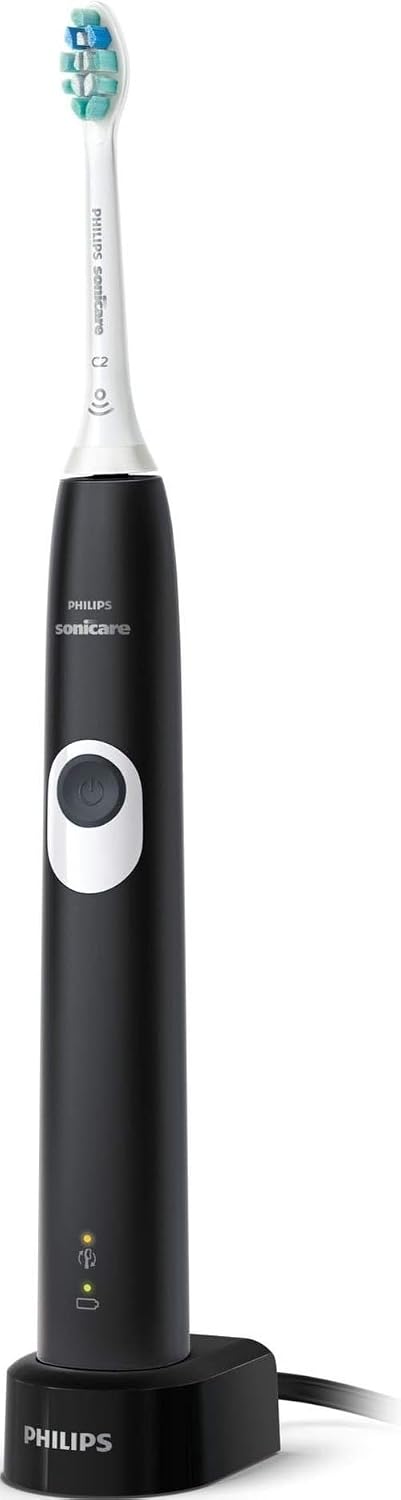
Philips Sonicare ProtectiveClean 4100 Rechargeable Electric Power Toothbrush, Black, HX6810/50
Real pressure sensor, genuine 2-minute timer, proven plaque removal
Visit on Amazon →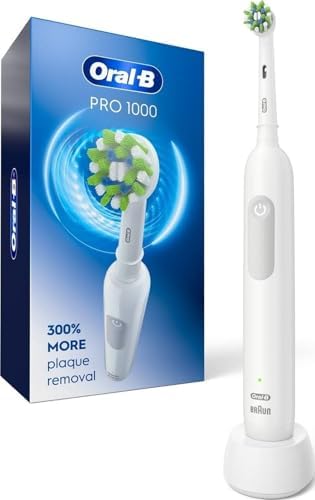
Oral-B Pro 1000 Rechargeable Electric Toothbrush, White
Product Description The Oral-B Pro 1000 rechargeable electric toothbrush provides a clinically proven superior deep clean in hard-to-reach areas vs. a regular manual toothbrush. 300% MOR
Visit on Amazon →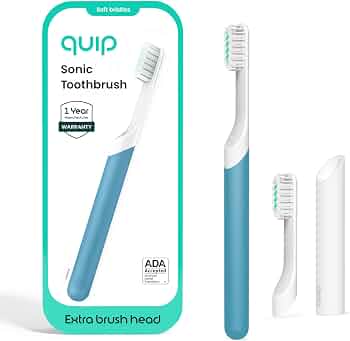
Quip Sonic Electric Toothbrush for Adults, Extra Brush Head, Marine Blue
Product Description The Oral-B Pro 1000 rechargeable electric toothbrush provides a clinically proven superior deep clean in hard-to-reach areas vs. a regular manual toothbrush. 300% MOR
Visit on Amazon →How I tested
I don't have a lab. I have a bathroom sink, a timer, and patients who let me look at their gums every six months. For this round, I used each brush for a minimum of three weeks, which is long enough for the novelty to wear off and the annoyances to surface.
I tracked how long the charge actually lasted versus what the box claimed. I checked whether the pulse at 30 seconds actually fired when I was in the back molars, where I always lose track of time. I pushed hard on purpose to see if the pressure sensor did anything or just lit up like a Christmas tree and kept letting me wreck my gums.
I also did the math on replacement heads, because that's the real price of any brush. A ~$30 brush with ~$12 heads costs you ~$78 in year one. A ~$100 brush with ~$8 heads costs you ~$132. The sticker price is a lie; the head cost is the truth.
The line in the sand: under ~$25 is a waste
Let me save you the time I wasted. Anything under ~$25 is not an electric toothbrush. It's a vibrating manual toothbrush. The motor doesn't have enough torque to disrupt biofilm, the timer is either absent or wrong, and the brush heads are made of bristles that feel like they came from a hotel sewing kit.
I bought a ~$22 Amazon special in 2021. It died in four months. The motor just stopped one morning, mid-brush, with toothpaste foam running down my chin. I stood there, toothbrush buzzing its last breath, and I thought: this is what my patients are buying.
Don't. The ~$30 line exists for a reason. It's where the engineering actually starts.
Philips Sonicare ProtectiveClean 4100
Let's start with the problem, because it's the reason I almost didn't include this brush. The replacement heads are ~$15 each. A four-pack is ~$50. That's robbery, and I've been saying it for years. Over three years, you'll spend ~$180 on heads for a brush that costs ~$40. That's the real price, and it's not pretty.
Visit on Amazon →
But here's the thing: this is the only brush in this price range with a pressure sensor that actually works.
I pushed hard on purpose, the way my patients do when they think more pressure equals more clean. The brush didn't just light up. It changed the vibration. The pulsing got faster, almost urgent, and the brush head stopped doing the work. It's the difference between a sensor that tells you you're wrong and a sensor that stops you from being wrong. This one stops you.
The 2-minute timer with the 30-second pulse actually works too. I timed it. Twice. It's accurate, which is embarrassingly rare in this price range.
I've had this brush for eight months. I've dropped it in the sink twice. The handle is slippery when wet, which is a real problem, because the brush is basically always wet. But it's still alive, still holds a charge for about two weeks, and my hygienist (my colleague, not me) commented on how much cleaner my gum line looked at my last cleaning.
Choose this one if you push too hard and need a brush that fights back. It's the best ~$40 you can spend on your gum line, as long as you budget for the heads.
Oral-B Pro 1000
The Oral-B Pro 1000 has been the budget king for a decade, and the reason is simple: the rotating head actually cleans better than sonic vibration. I've seen it in plaque scores. The round head gets into the gum line in a way that sonic brushes just don't, especially in the back molars where everyone's calculus builds up.
Visit on Amazon →
But I'm leading with the problem, because it's the problem: the battery dies.
I've owned two of these. The first one stopped holding a charge after 14 months. It would charge overnight and die by the third brushing session. The second one made it 16 months before the same thing happened. This isn't a lemon, it's a pattern. Patients tell me the same thing. "It just stopped holding a charge" is the most common complaint I hear about this brush, and it's not a coincidence.
The other issue: there's no pressure sensor. You push too hard, and nothing stops you. The brush just keeps spinning and your gums keep receding. If you're a hard pusher, this is not your brush.
But for ~$30, the clean is genuinely better than anything else at this price. The 2-minute timer with the quadrant pulse works. The handle is grippy, which I appreciate after the slippery Sonicare. The heads are cheaper too, about ~$8 each, which makes the three-year cost about ~$102. That's ~$78 less than the Sonicare over the same period.
Choose this one if you want the best plaque removal for the lowest upfront cost and you're willing to replace the handle every 14 to 18 months. Consider it a disposable with a replaceable head.
Quip
I wanted to like Quip. I really did. It's cheap, it's slim, it's simple, and the subscription model means you never have to remember to buy heads. It's the toothbrush equivalent of a meal kit: convenient, predictable, and utterly forgettable.
The problem is the power. There isn't enough of it.
The Quip vibrates, sure. It's not nothing. But it's not enough to actually remove biofilm from the gum line. I've seen patients who use Quip exclusively, and their plaque scores are consistently higher than patients who use a basic Oral-B. The vibration is too weak, the brush head is too soft, and the result is that you're basically brushing with a slightly aggressive manual toothbrush.
The timer is also just a vibration at the end. There's no quadrant pulse. You don't know when to switch sections. You just buzz at the end and hope you covered everything.
Here's what the Quip gets right: the form factor. It's genuinely slim, it fits in a travel case that actually holds the brush and a head, and it looks good on a counter. My patients who travel for work love it as a backup. That's the use case. It's a travel brush, not a main brush.
Choose this one if you need a backup for your gym bag or your carry-on. Choose it if you hate the bulk of a real electric brush. Don't choose it if you're expecting a clean that matches a ~$30 Oral-B, because it won't deliver.
The one I didn't include: the "~$50" trap
I almost included the Oral-B Vitality, which is technically under ~$30, but I couldn't bring myself to recommend it. It has the same rotating head as the Pro 1000, but it's missing the 2-minute timer. The brush just runs until you turn it off. I've had patients tell me they brush for 45 seconds with it because they have no idea when to stop. A brush without a timer is not a brush, it's a hazard.
The math you should actually do
Before you buy any brush, do this calculation: cost of the brush plus cost of replacement heads over three years.
The Sonicare 4100: ~$40 plus ~$150 in heads (four per year at ~$13 each) equals ~$190 over three years. That's ~$0.17 per brushing session.
The Oral-B Pro 1000: ~$30 plus ~$96 in heads (four per year at ~$8 each), plus one replacement handle at ~$30 when the battery dies, equals ~$156 over three years. That's ~$0.14 per brushing session.
The Quip: ~$25 plus ~$45 in subscription heads over three years (three heads per year at ~$5 each for the basic plan, which is actually the cheapest head cost in this roundup) equals ~$70 over three years. That's ~$0.06 per brushing session.
The Quip is the cheapest to own. It's also the worst at cleaning. You get what you pay for.
The bottom line
I don't track prices day to day, so I won't pretend to know what these will cost next week. But I know what they cost to own, and I know what they do to gums.
The Sonicare 4100 is the best brush under ~$50, full stop. The pressure sensor alone is worth the extra ~$10 over the Oral-B, because gum recession is permanent and I've seen too many patients lose gum tissue to a brush that let them push too hard.
The Oral-B Pro 1000 is the best value if you're on a tight budget and you're not a hard pusher. Just plan to replace it every 18 months. That's not a defect, that's the price of admission.
The Quip is a travel brush. That's it.
Buy the Sonicare. Budget for the heads. Your gums will still be there in ten years, and that's the only metric that matters.