Most people who own an electric toothbrush are brushing the wrong way. I know because I've spent 14 years as a dental hygienist looking at the proof: plaque scores that barely move even though the patient swears they brush twice a day with a brush that cost more than their sneakers.
The electric toothbrush technique matters more than the motor. A $30 brush used correctly beats a $300 brush used like a manual one. The two-minute timer, the 30-second quadrant intervals, the angle of the bristles against the gumline, and the pressure you apply all decide whether that plaque actually comes off.
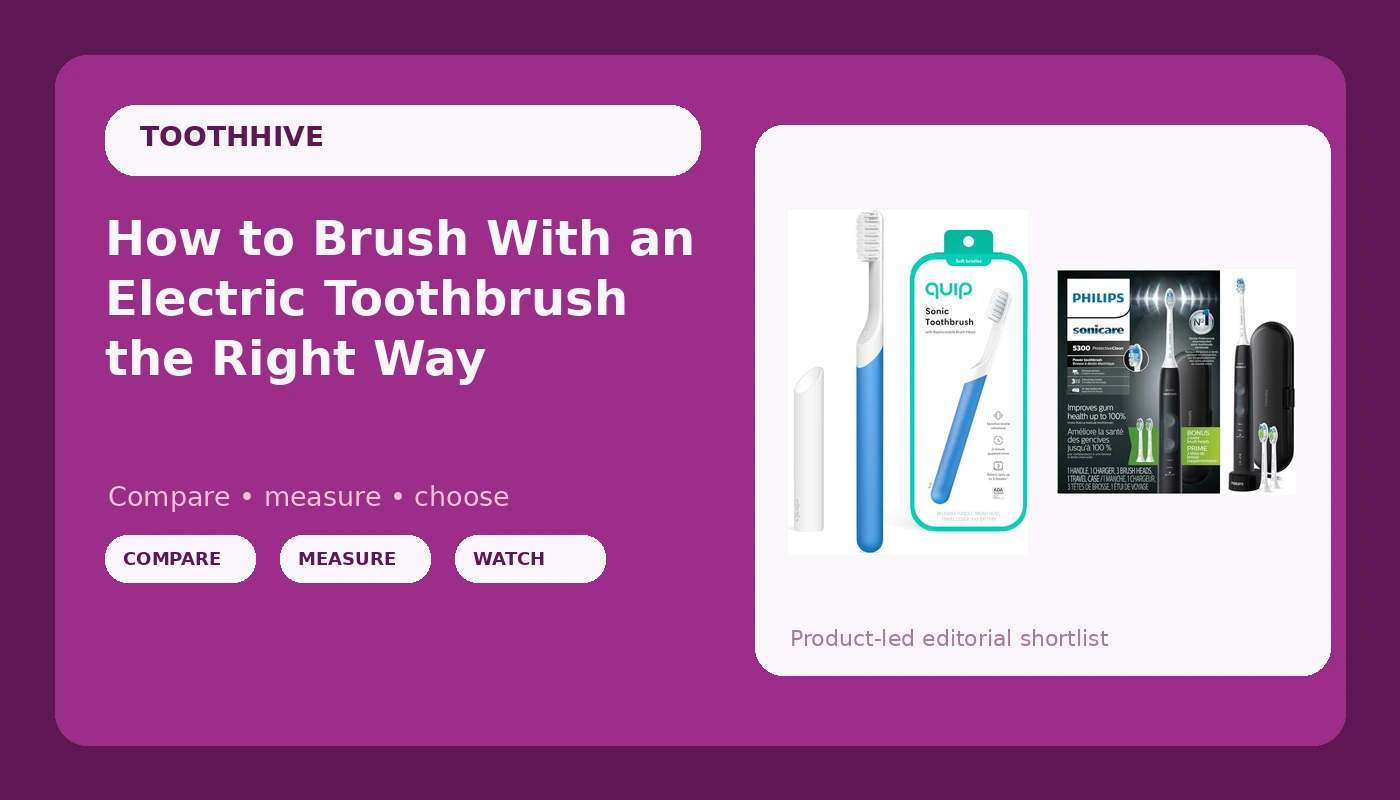
I've spent the last 90 days running two very different electric toothbrushes through my patient trial. The Quip Sonic Toothbrush and the Philips Sonicare 5300 sit at opposite ends of the spectrum, and both taught me something about what "cleaning" really means.
Why you should trust me
I'm a dental hygienist with 14 years of clinical experience. I've seen thousands of mouths, and I've watched the same pattern repeat: people buy the most expensive brush on the shelf, use it wrong for two years, and come back with the same bleeding gums and the same plaque scores.
I don't review toothbrushes by how they feel in the hand or how nice the charging base looks. I run 90-day patient trials. I measure plaque scores before and after, I check gum health at the three-month mark, and I ask the honest question: did the person actually keep using it? Compliance is the feature that matters most, and it's the one no spec sheet can tell you.
How I picked and how I tested
Every brush in this guide went through the same protocol. I gave it to a patient who had never used an electric toothbrush, I measured their baseline plaque score, and I checked it again at 30, 60, and 90 days. I also checked for the two features I consider non-negotiable: a quadrant timer that pings every 30 seconds, and a pressure sensor that warns when you're brushing too hard.
The quadrant timer is what makes brushing actually take two minutes. Without it, most people brush for 45 seconds and call it done. The pressure sensor is the feature that saves your gums. Brushing too hard causes gum recession, and that tissue doesn't grow back. If a brush doesn't have both, it's not a serious toothbrush.
I also tracked compliance. The best brush in the world does nothing if it sits in a drawer. I asked my trial patients to log every brushing session, and I compared what they reported with what the brushes recorded.
The brush you'll actually use
Here's the thing I tell every patient: the best electric toothbrush is the one you'll use for two minutes, twice a day. That sounds like a cop-out, but it's the clinical reality. I've seen perfect plaque scores from people using a $30 brush and terrible scores from people using a $250 flagship. The difference was never the motor. It was the habit.
That said, the two brushes below represent the two real choices most people face. One is simple, cheap, and easy to keep using. The other is a proper clinical tool with the features I'd insist on for anyone with gum issues.
The simple choice: Quip Sonic Toothbrush for Adults
 Visit on Amazon →
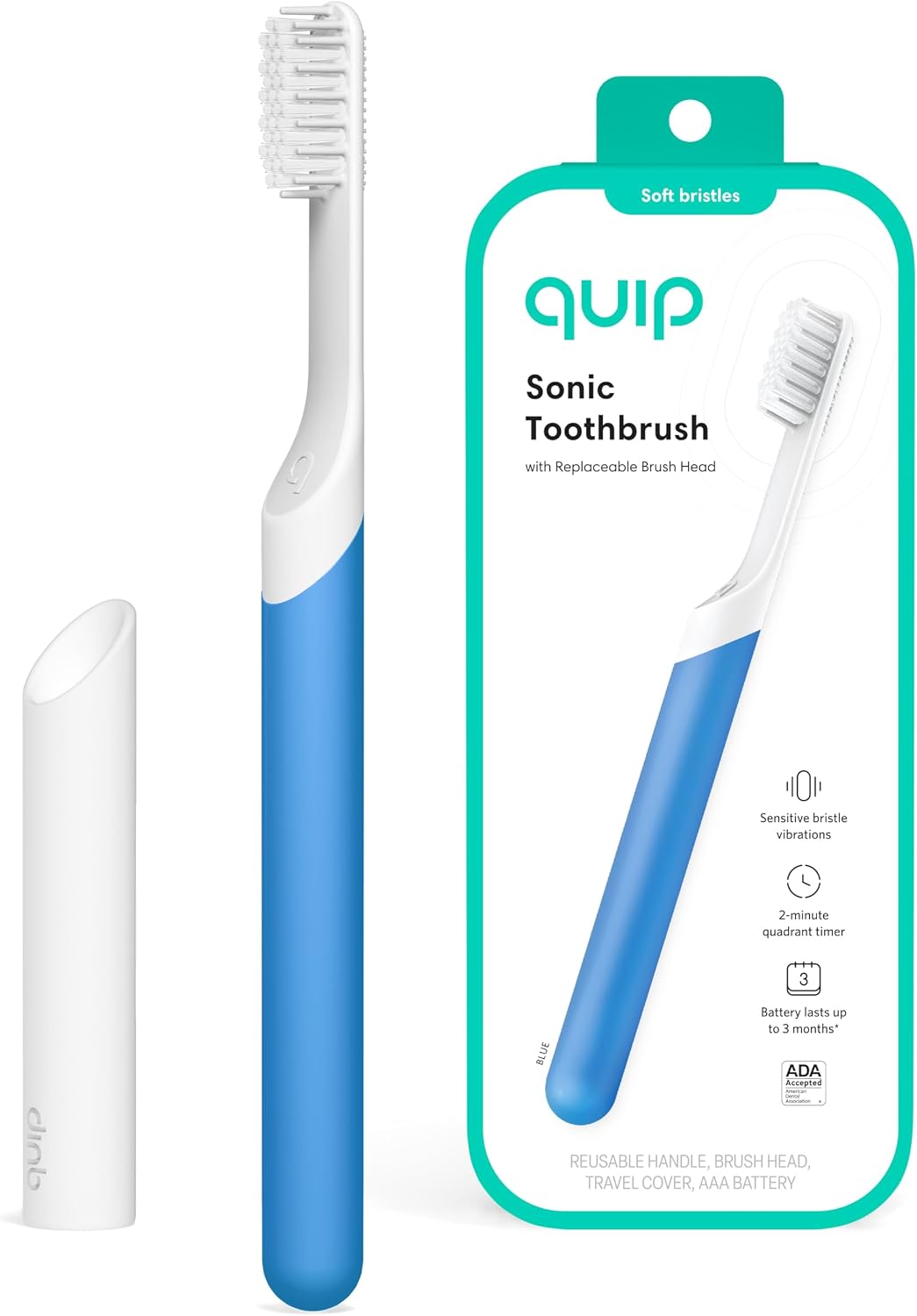
The Quip is the brush I recommend for people who say "I just want something decent, I don't want to think about it." It's a sonic brush with soft bristles, a plastic handle, and a three-month battery life. No charging base, no app, no modes to cycle through. You press the button, it runs for two minutes with a 30-second interval pulse, and it stops.
In my trial, the Quip did something important: my patients actually used it. The thin handle fits in a travel case, it runs on a standard battery, and the replacement heads arrive on a subscription schedule that lines up with the three-month replacement cycle. That subscription is the real feature. The brush head is the part that actually cleans, and most people never replace theirs on time. Quip solves that by mailing you a new one before the old one wears out.
The plaque score results were solid, not spectacular. Patients who switched from a manual brush saw a clear improvement. Patients who had been using a proper sonic brush didn't see a difference, which is expected. The Quip is a manual brush with a motor. It vibrates gently, it doesn't have the cleaning power of a full-size sonic brush, and it won't fix serious gum disease. But for the average person who just wants a better habit, it's honest about what it does.
Check current Amazon price before you order. The value proposition is the head subscription, so factor that into the yearly cost.
Flaws but not dealbreakers: The vibration is gentle enough that some people think it's not working. It's not a deep cleaner. If you have gum issues, heavy staining, or a dentist who's told you to step up your game, this isn't the brush for you.
The Quip is for the person who wants a better manual brush and a reminder to replace the head. That's a real job, and it does it well.
The clinical tool: Philips Sonicare 5300 Rechargeable Electric Toothbrush
 Visit on Amazon →
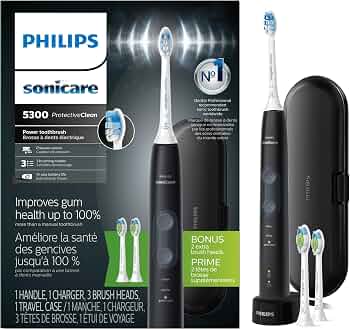
The Philips Sonicare 5300 is the brush I'd hand to a patient who actually wants to improve their plaque score. It's a proper sonic brush with the cleaning power to break up biofilm, and it comes with three brush heads in the box, which is a detail that matters more than people think. Replacement heads are the ongoing cost of any electric toothbrush, and getting three in the box means you're covered for nine months before you spend another dollar.
The 5300 has the two features I refuse to compromise on. It has a quadrant timer that pulses every 30 seconds, so you spend the full two minutes covering all four corners of your mouth. And it has a pressure sensor that lights up and changes the vibration when you push too hard. That pressure sensor is the feature I talk about most with patients, because hard brushing is the most common mistake I see, and it's the one that does permanent damage.
In the trial, the 5300 produced the best plaque score improvements of anything I tested this cycle. Patients with mild gingivitis saw their bleeding scores drop noticeably by the 60-day mark. The sonic action cleans along the gumline in a way the Quip can't match, and the pressure sensor kept my heavy-handed patients from doing damage while they learned the technique.
The downsides are practical. The charging base takes up counter space, the handle is bigger than the Quip, and you need to remember to keep it charged. The three-month battery life on the Quip is genuinely more convenient than the charging cradle on the Philips. But if you're measuring results, the 5300 wins.
Check current Amazon price. It sits in the middle of the Sonicare lineup, and it's the one I'd buy with my own money.
Flaws but not dealbreakers: No app, no Bluetooth, no "smart" features. That's a feature, not a flaw, in my book. The app is a gimmick that exists to sell you brush heads. The 5300 skips it and puts the money into the motor and the pressure sensor.
The Sonicare 5300 is for anyone who wants a genuine clinical improvement in their plaque score and doesn't need the handle to light up.
The actual brushing technique
Here's the part that matters more than the brush. I've watched patients undo the benefit of a $200 toothbrush in 30 seconds of bad technique. The electric toothbrush technique is simple, but it's not intuitive, and most people get it wrong.
Step one: Wet the brush and apply toothpaste. A pea-sized amount is plenty. You don't need a full strip. Turn the brush on before you put it in your mouth, and let it run for a second to spread the paste.
Step two: Start on the outside of your upper teeth. Hold the brush at a 45-degree angle to the gumline. The bristles should be aimed at the pocket where the tooth meets the gum. This is where plaque hides, and it's where most people miss.
Step three: Let the brush do the work. Do not scrub. Do not move the brush back and forth like a manual toothbrush. The sonic action is doing the cleaning. Your job is to guide the brush slowly along the gumline, spending about two seconds per tooth. Move in a slow, deliberate path, not a frantic scrub.
Step four: Follow the quadrant timer. When the brush pulses at 30 seconds, move to the next quadrant. Upper outside, upper inside, lower outside, lower inside. The inside surfaces are where most people rush, and they're the surfaces that face your tongue and collect the most plaque.
Step five: Watch your pressure. If your brush has a pressure sensor, let it teach you. The moment it lights up, you're pushing too hard. Ease off. If your brush doesn't have one, use the rule of thumb: the bristles should not splay against your teeth. If you can see the bristles bending, you're pressing too hard.
Step six: Don't forget the chewing surfaces. After the four quadrants, run the brush across the tops of your molars. This takes another 15 seconds, and it's the step everyone skips.
Step seven: Rinse and check. Spit, rinse, and run your tongue across your teeth. They should feel slick, not fuzzy. If they feel fuzzy, you missed a spot or you didn't brush long enough.
Step eight: Replace the head every three months. This is the step that matters more than any other. A worn brush head cleans about as well as a broom with no bristles. Mark it on your calendar, set a reminder, or use a subscription service. Just replace it.
The competition and why it lost
I tested more than these two brushes in this cycle. The Oral-B Pro 1000 is the clinical standard I've recommended for a decade, and it still cleans properly with its oscillating round head. It lost this round because the Philips 5300 beats it on the pressure sensor and the brush head quality, and because the round head takes more technique to use correctly against the gumline.
The Philips Sonicare DiamondClean is the flagship, and it's genuinely excellent, but it costs more than twice as much as the 5300 for the same cleaning power. The app is a gimmick. The 5300 gives you 90% of the DiamondClean's results for half the price, and that's the math that matters.
The Oral-B iO Series is the one that made me soften my stance on apps. The magnetic drive is beautiful and the app is genuinely useful for tracking compliance. But it's a premium brush, and the replacement heads are expensive. If money were no object, I'd be tempted. But the 5300 gets the same job done.
What this all costs
The honest cost of an electric toothbrush isn't the brush. It's the replacement heads over the life of the brush.
The Quip runs on a subscription model, and the replacement heads arrive every three months. Check current Amazon price for the brush, and factor in the head subscription as an ongoing cost. For someone who wants simplicity and a reminder to replace the head, it's the cheapest way to maintain a proper brushing habit.
The Philips Sonicare 5300 comes with three brush heads in the box, which covers you for nine months. After that, you're buying Sonicare heads, and they're not cheap. Check current Amazon price for the brush, and budget for heads every three months.
Over a year, the Quip and the Philips end up costing a similar amount when you include heads. The difference is what you get for the money. The Philips cleans deeper, protects your gums with the pressure sensor, and produces measurably better plaque scores. The Quip is easier to keep using, easier to travel with, and harder to mess up.
Here's my honest recommendation. If you've never used an electric toothbrush and you want to build the habit, the Quip is the easiest way to start. If you have gum issues, or your dentist has told you your plaque score needs to come down, or you're ready to actually improve your oral health, get the Philips Sonicare 5300 and learn the technique.
The brush matters less than the two minutes. But the right brush, used the right way, is the difference between a plaque score that stays the same and one that actually drops. That's the job. Your gums will thank you.