Most people who buy an electric toothbrush are buying a motor and hoping it fixes their gums. It doesn't. In fourteen years of hygiene, the patients with the cleanest mouths at their six-month recall are not the ones with the most expensive brushes on the counter. They are the ones with decent electric toothbrush technique, a two-minute timer they actually obey, and a brush head that isn't months past its replacement date.
I'm Dr. Lena, a dental hygienist in Madison, Wisconsin. I have looked inside thousands of mouths, and I can usually guess what kind of brush someone owns by the pattern of wear on their gumline. Receding gums on one side, a notch worn into a single tooth, bleeding at the margins: those are not signs of a bad toothbrush. They are signs of a good toothbrush used with too much force, too little time, or both.
This guide is not about which brush has the best app. It is about the twenty minutes of habit change that decide whether your gums stop bleeding at your next cleaning. The brush matters less than you think. How you hold it matters more than any spec sheet.
Why you should trust me
I have spent fourteen years in clinical hygiene, most of it in a general practice where I see the same patients twice a year for years. That continuity is the whole education. I get to watch what happens after someone buys a new brush, and I get to compare the plaque score at the next visit to the one before it.
I have watched patients buy a flagship brush with a connected app and use it wrong for two years. I have watched patients with a basic brush and a working timer walk out with clean margins every single visit. The difference was never the motor. It was pressure, coverage, and time.
I don't review a brush without asking three questions. Does it have a two-minute quadrant timer? Does it have a pressure sensor that warns you before you do damage? And would my patients actually keep using it after the novelty wears off? Your gums don't care about the unboxing video.
What actually matters in an electric toothbrush
Here are the direct answers, in the order I would rank them if you asked me in the chair.
The quadrant timer is the feature. Two minutes total, thirty seconds per quadrant. If a brush does not have that, it is a manual brush with a motor and a markup. Everything else is secondary.
The pressure sensor is the protective feature. Brushing too hard does more damage than skipping a session. It wears enamel at the gumline and drives gum recession, and recession does not grow back. A sensor that flashes or buzzes when you press too hard is the single most useful piece of technology on a modern brush.
Oscillation versus sonic is a preference, not a ranking. Oral-B brushes use a small round head that oscillates and rotates. Sonicare brushes vibrate the bristles at high frequency with a longer head. Both remove plaque. Both have clinical followings. The head shape and your hand habits matter more than the motor type.
Cleaning modes are mostly marketing. Five modes sounds generous. In practice, nearly everyone uses one, and the extra modes are there to justify a higher shelf position. If a brush needs an app to change modes, the app is the product, not the brush.
The app is optional. The timer is not. Compliance data is genuinely interesting, and I will admit I have checked my own. But no app has ever removed plaque. The timer did that.
Replacement heads are the real cost. A brush head loses its bristle structure and its cleaning efficiency long before it looks worn out. Budget for a fresh head every three months, which is four a year, and price that in before you fall in love with a handle.
The two brushes I would hand a patient
I keep this short on purpose. Most people do not need a comparison table with twenty rows. They need one brush that fits their gums and one alternative in case the first one feels wrong in the hand.
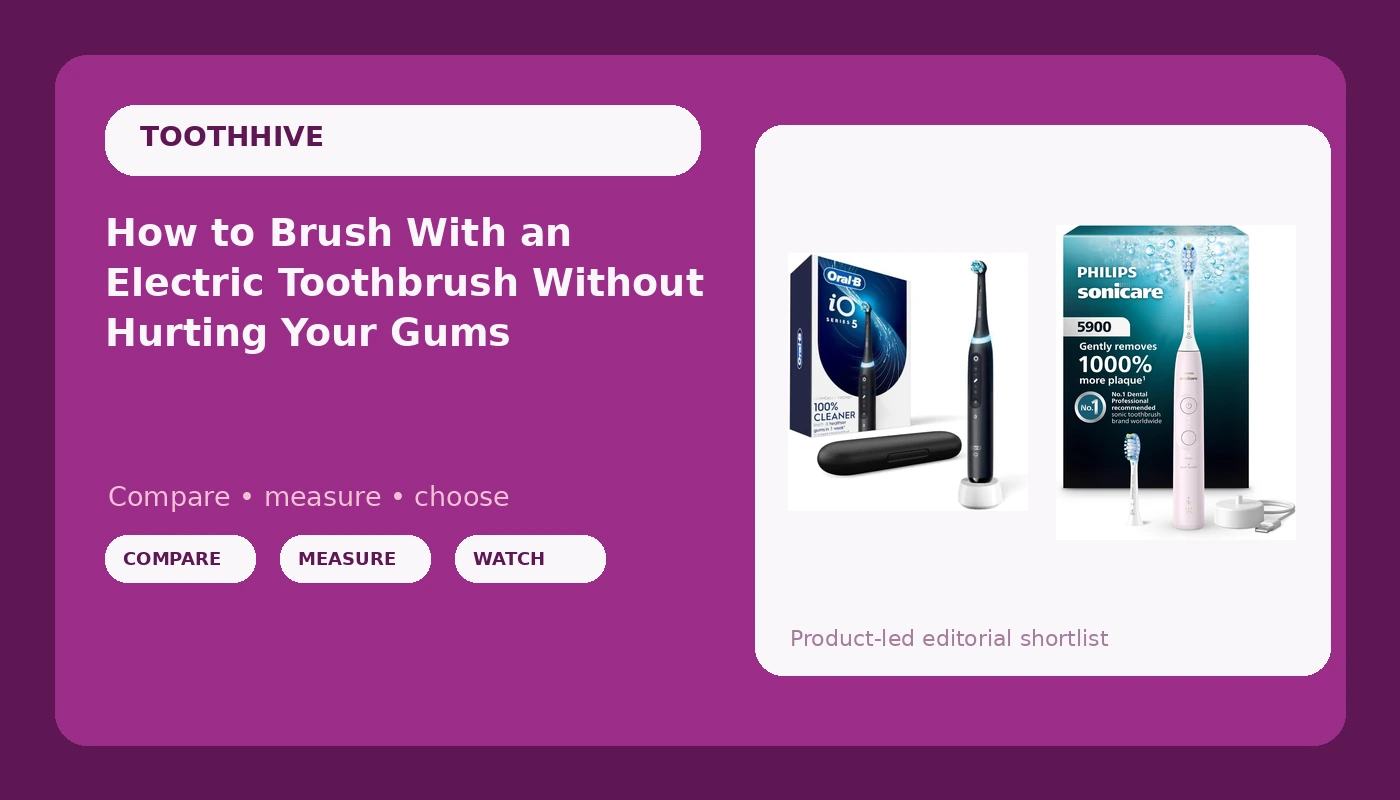
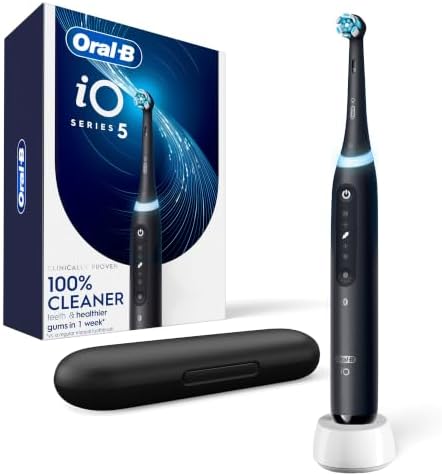
Best for gum health: Oral-B Rechargeable Electric Toothbrush, iO5 Customizable Clean, 5 Cleaning Modes, Visual Pressure Sensor to Protect Gums, Travel Case, Black
 Visit on Amazon →
This is the one I reach for when a patient walks in with receding gums and a history of hard brushing. The round oscillating head cups a single tooth at a time, which makes it easy to feel exactly where you are, and the visual pressure sensor tells you when you have crossed from cleaning into scrubbing. That feedback loop is what changes behavior. Patients who can see the warning light stop pressing.
The five cleaning modes cover the usual ground, from a sensitive setting for people with tender gums to a deeper clean mode for the days you want it. You will likely live in one or two of them, and that is fine. The travel case matters more than it sounds if you are the kind of person whose brush otherwise rides loose in a toiletry bag.
Flaws but not dealbreakers: This is a premium handle, and the replacement heads carry a premium price to match. It also has more modes than anyone needs. If you want the simplest possible brush with the sensor and the timer, you are paying for capability you may never touch.
Anyone whose hygienist has mentioned recession, or who knows they press too hard, should start here. The pressure sensor alone justifies the step up.
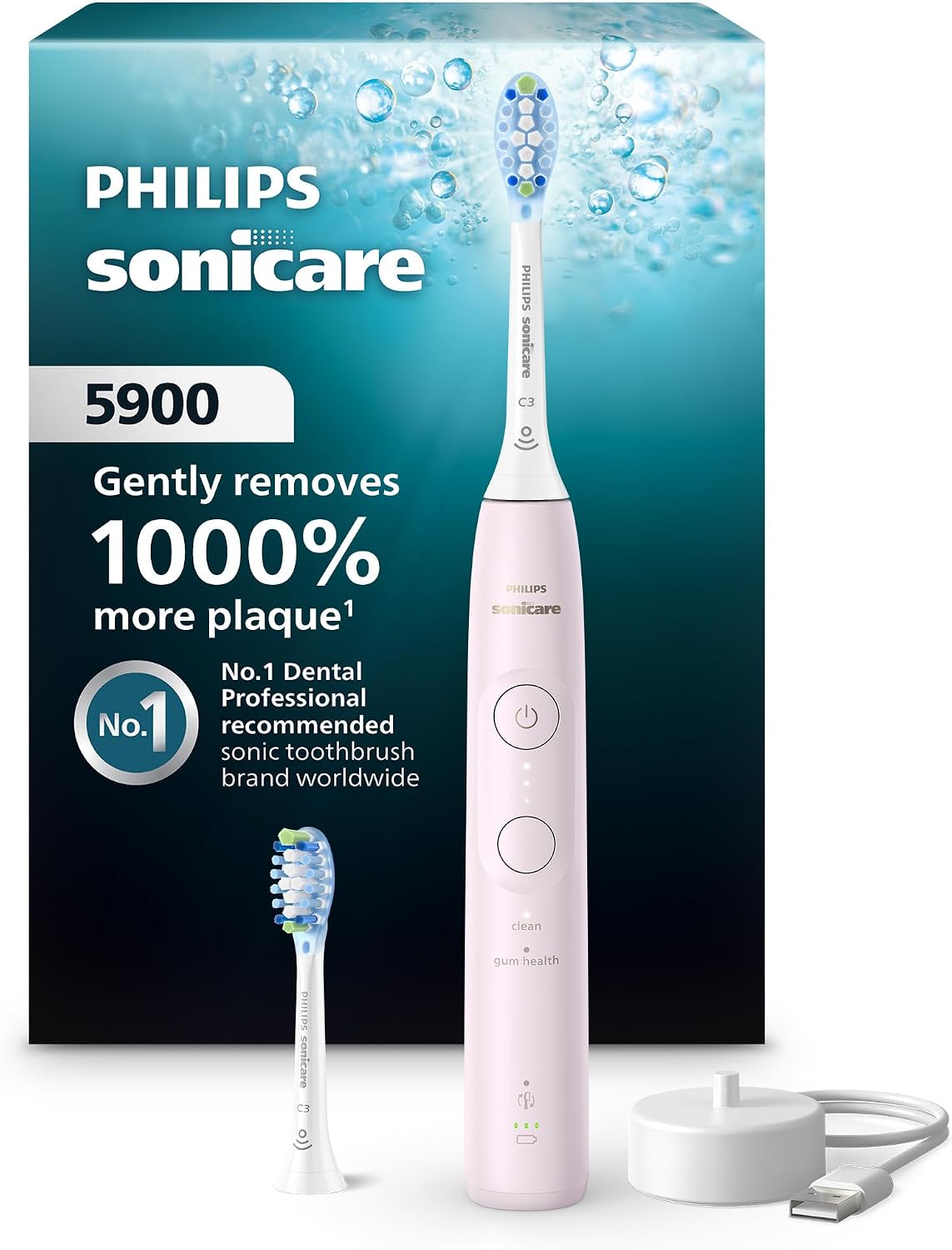
Best for gentle sonic cleaning: Philips Sonicare 5900 Rechargeable Electric Toothbrush, 2 Brush Heads, Pink
 Visit on Amazon →
If the round head feels aggressive in your mouth, this is the alternative I suggest. Sonicare brushes vibrate the bristles rather than spinning a small cup, and the longer head covers more surface per pass, so the sensation is a buzz rather than a scrub. Patients who describe the Oral-B motion as "too much" tend to relax with a sonic brush, and a brush you relax with is a brush you use for the full two minutes.
It ships with two brush heads, which gets you roughly six months of brushing before you buy refills, and that is a real convenience for a first-time electric user. The pink finish is a small thing, but a brush that looks good on the counter is a brush that stays on the counter instead of in the drawer.
Flaws but not dealbreakers: Sonic brushes ask you to move the head slowly across the teeth and let the vibration do the work. If you have years of scrubbing habits, that adjustment takes a week or two. It is also a mid-tier model, so if you want the connected features of a flagship, this is not that.
Anyone who wants a gentle-feeling clean, or who shares a bathroom with someone who does, will be happy here.
The routine, step by step
This is the part that changes your checkups. It works with either brush above, and it works with whatever you already own if it has a timer.
Step one: Charge it and leave it on the counter. A brush in a drawer is a manual brush. The bathroom counter is the point. Put it where you will see it at 10 p.m. when you are tired and tempted to skip.
Step two: Wet the head and use a pea-sized amount of fluoride toothpaste. You do not need more. A loaded brush turns into foam in ten seconds and you lose the friction that does the cleaning.
Step three: Start in the same quadrant every time. Consistency is how you stop missing the same spot. I suggest upper right, outside surface first, then work your way around the mouth in a fixed order.
Step four: Angle the bristles at the gumline. Forty-five degrees, so the tips sit partly on the tooth and partly on the gum. This is the single most common thing patients get wrong. If you brush only the flat faces of the teeth, you clean the part people can see and leave the part that bleeds.
Step five: Let the brush do the work. Guide it. Do not scrub with it. Your job is to move the head slowly from tooth to tooth, spending a beat on each one, while the motor handles the motion.
Step six: Obey the quadrant timer. When the brush pulses or pauses, move to the next section. Do not reset it and start over. Do not decide you are done at ninety seconds because your arm is tired. Two minutes, thirty seconds per quadrant, every time.
Step seven: Finish with the gumline behind your back teeth and your tongue. The inside of the lower front teeth and the far side of your last molars are where tartar builds fastest. Then a gentle pass over the tongue, which does more for breath than any rinse.
Step eight: Spit, do not rinse. Rinsing with water after brushing washes away the fluoride you just spent two minutes applying. Spit out the excess and leave the rest.
The mistakes that undo good technique
Pressing too hard. This is the big one. Hard brushing does more damage than skipping a night. If your brush has a pressure sensor, treat every warning as a stop sign, not a suggestion. If it doesn't, hold the brush with two fingers instead of a fist and let that be your sensor.
Moving too fast. The vibration does the work, but it still needs contact time. Rushing the head across the teeth at manual-brush speed cuts the cleaning time per tooth to almost nothing.
Skipping the gumline. Cleaning the crowns and ignoring the margins is why people with good brushing habits still get bleeding at their cleanings. The bacteria that cause gum inflammation live right at the margin.
Keeping a head too long. Bristles splay and lose their shape, and a splayed head cannot reach into the sulcus. Three months is the standard. If the bristles look bent before that, you are pressing too hard.
Buying a brush you won't use. A brush with a hundred features that sits in a drawer loses to a simple one that lives on the counter. This is why I ask about habits before I ask about specs.
How to know it's working
The feedback comes fast. Within two weeks of proper technique, most people notice their gums stop bleeding when they floss and the bristles on their brush head stay straighter for longer. By the next cleaning, the plaque score should be lower and the margins should look calmer.
If your gums are still bleeding at every cleaning despite two minutes twice a day, that is a conversation for your dentist, not a reason to buy a more expensive brush. Bleeding that persists is a sign to get checked, not a sign to upgrade.
What this all costs
The handle is the cheap part. The heads are the subscription. Two people brushing properly go through eight heads a year between them, and the price of those heads is where a premium brush stops being premium. Do the math on a year of refills before you decide between these two.
The timer and the pressure sensor are what you are actually buying. Everything above that, the modes, the case, the app, is convenience. Convenience is fine. It is just not what makes your gums healthier.
Check current Amazon price on both before you decide, and factor in the refills.
Bottom line
The best toothbrush is the one you will use for two minutes, twice a day, without pressing. Pick the Oral-B iO5 if you press too hard and want to see the warning. Pick the Sonicare 5900 if you want a gentler feel and two heads in the box. Then stop shopping and start brushing. That is the whole job, and your gums will tell you within a month whether you did it.