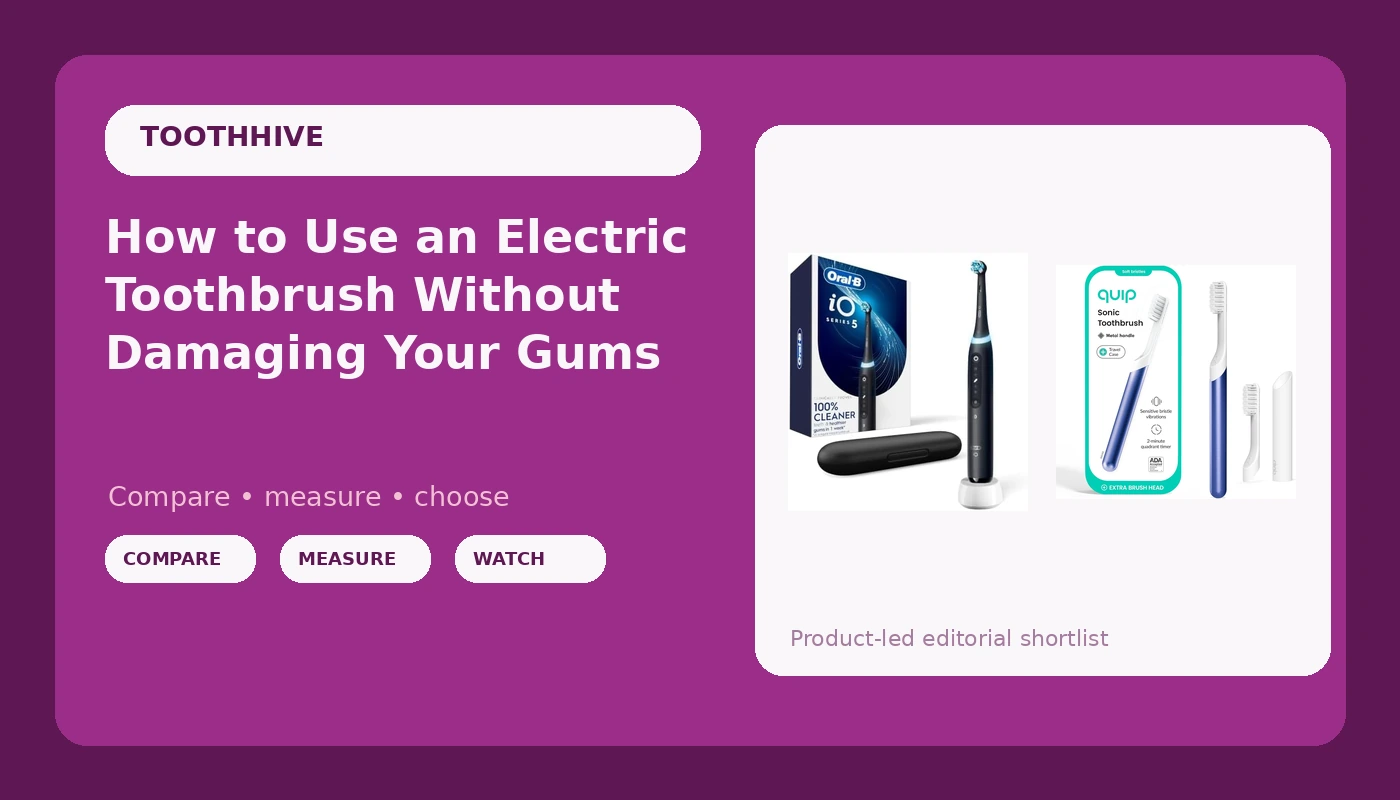
Most people who brush twice a day still miss the same three spots: the gumline along the outside of the upper molars, the inside of the lower front teeth, and the back of the last molar on each side. I have looked at thousands of mouths in 14 years as a dental hygienist, and the pattern is boringly consistent. The brush is rarely the problem.
Good electric toothbrush technique is the problem, or rather the lack of it. A powered brush removes some of the work, a timer removes the guessing, and a pressure sensor removes the damage. Everything else, including the app that wants to sell you brush heads, is decoration.
This is the routine I walk patients through in the chair, plus the two brushes I hand people when they ask what to buy. It takes about 20 minutes to learn and then it is just what you do at the sink.
Why you should trust me
I have been a dental hygienist for 14 years, which means I have looked inside something like a thousand mouths a year and scraped the evidence off their teeth. I can usually tell what a person brushes with, how hard they press, and whether they reach the gumline, just by where the plaque sits. That is the whole basis of how I judge a toothbrush: not how it feels in the hand, but what it leaves behind after two minutes.
I also have a bias I will admit up front. I do not believe a $300 brush cleans three times better than a $60 one. The motor is not the bottleneck. The hand holding it is. What I look for is a two-minute timer with 30-second intervals, a pressure sensor that fires before you do damage, and a brush head that is easy and cheap enough to replace so that you actually replace it. A brush with those three things can do the job.
The other half of the equation is compliance. The brush you pick up twice a day beats the better brush sitting in a drawer because its app nagged you into resentment.
How I judge a toothbrush
I run every brush through the same four questions before I will name it to a patient.
Does it have a quadrant timer? Not a two-minute beep at the end. A timer that pulses every 30 seconds so you move to the next section of your mouth. This one feature does more for plaque scores than any motor upgrade, because it forces you to spend time on the surfaces you would otherwise skip.
Is there a real pressure sensor? Brushing too hard is how gums recede, and recession is permanent. A sensor that warns you, by vibration, sound, or a light, is the single most protective feature on a powered brush. A "gentle mode" is not the same thing. Gentle mode is a motor setting. A pressure sensor is feedback.
What do the replacement heads cost over a year? This is the number nobody checks and the number that decides whether the brush is still usable in month eight. Budget for four heads a year, one per quarter. If heads cost more than the brush did, you bought a subscription, not a toothbrush.
Would a real patient keep using it? Not a reviewer. A tired person at 11 p.m. who wants to go to bed. If the brush needs a phone, an account, and a firmware update to change modes, the answer is usually no.
Those four questions are why the two brushes below made the cut, for two very different kinds of brusher.
Two brushes that make the routine easier
Neither of these is a magic wand. They are tools that support the technique, and the technique is still yours to supply. But they hit the checklist in different ways, and they suit different people.
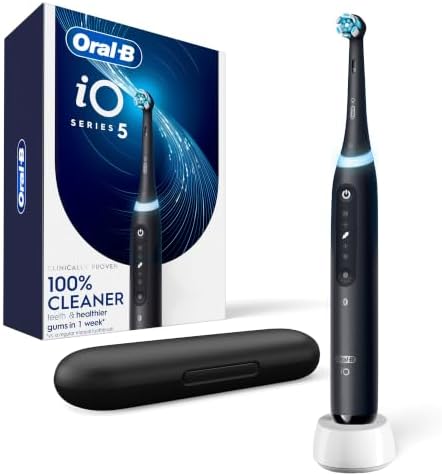
Our pick: Oral-B Rechargeable Electric Toothbrush, iO5 Customizable Clean, 5 Cleaning Modes, Visual Pressure Sensor to Protect Gums, Travel Case, Black
 Visit on Amazon →
The reason this is my pick is the visual pressure sensor. When a patient tells me their gums bleed or their hygienist mentioned recession, the first thing I want to change is how hard they press, and a sensor that shows you in real time is the fastest way to unlearn a hard hand. You cannot feel yourself pressing too hard. That is the trap. The feedback has to come from somewhere outside your own grip.
The five cleaning modes are more than most people need, and I will say plainly that you will probably live in one of them. That is fine. The modes are not the feature. The pressure feedback and the brush head are the features, and the round oscillating head is the design that has the longest clinical track record for reaching the gumline. The travel case matters more than it sounds like it should, because a brush that comes with you on trips is a brush you do not fall out of the habit with.
Flaws but not dealbreakers: More modes than anyone uses, and a premium price for the class. If you want the same job done for less, the checklist above matters more than the badge on the handle.
This is the brush I point people toward when gum health is the specific concern, or when they have already been told they brush too hard.
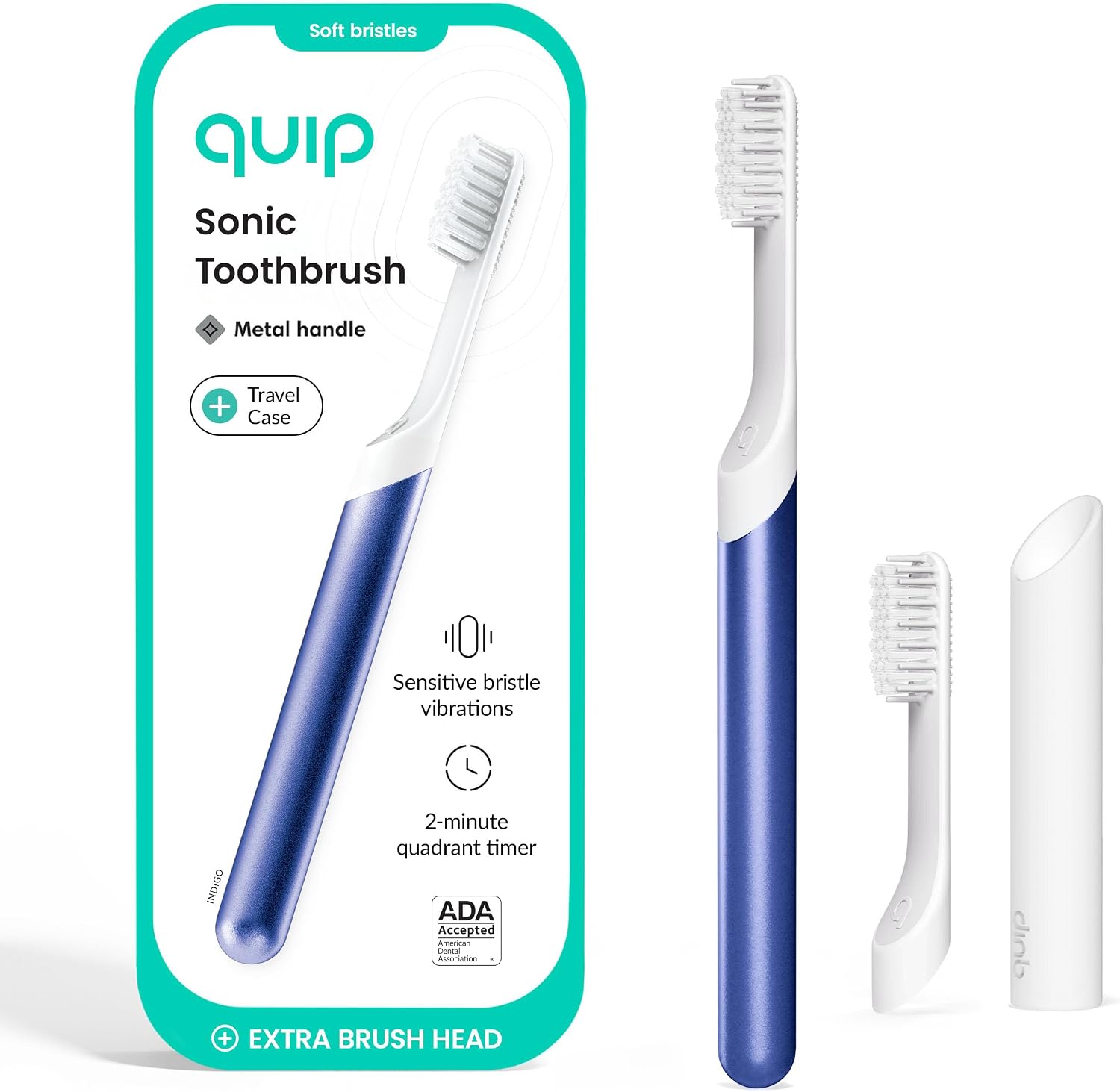
Budget pick: Quip Sonic Electric Toothbrush, Extra Brush Head, Metal Handle, Indigo
 Visit on Amazon →
Quip is the brush for people who want a decent brush and do not want to think about it. The handle is slim and metal, the design is clean, and the extra head in the box means you are covered for the first replacement without a separate order. The subscription model is genuinely convenient if you are the kind of person who never remembers to buy heads, and that convenience is the whole pitch.
Here is my honest framing, and I tell patients this directly: Quip is closer to a manual brush with a motor than it is to a high-torque oscillating brush. That is not an insult. It is a description of who it suits. If your technique is already decent, meaning you use light pressure and work the gumline, a simple sonic brush will do the job. If you are a hard brusher who scrubs, the lack of a pressure sensor is the tradeoff you are accepting, and you should work on the hand pressure deliberately.
Flaws but not dealbreakers: Simpler motor than the oscillating class, and no pressure feedback on the model listed here. What you get in return is a brush that is easy to keep using and heads that arrive without a reminder.
This is the right pick for the person who has been meaning to buy an electric brush for two years and keeps not doing it. Simple beats aspirational.
The routine: how to brush with an electric toothbrush
Now the part that actually changes your plaque score. This works with any powered brush. If yours has a quadrant timer and a pressure sensor, use them. If it does not, use a clock.
Step one: Set up before you start. Seat the head firmly on the handle, it should click or press fully home. Use a pea-sized amount of fluoride toothpaste. Do not run the brush under the tap with the paste on it, because you are just rinsing the fluoride off before it touches your teeth.
Step two: Pick a quadrant and stay in it. Divide your mouth into four sections: upper right, upper left, lower right, lower left. Spend 30 seconds in each. Most people spend their first 40 seconds on the front teeth because that is what they see in the mirror, then rush the molars where the plaque actually accumulates. The timer is not a suggestion. It is the correction.
Step three: Angle the head at the gumline. Tilt the brush about 45 degrees so the bristles meet the tooth and the gum at the same time. This is the single most common miss I see. Patients brush the crowns of their teeth beautifully and leave a rim of plaque sitting right at the gum margin, which is exactly where inflammation starts.
Step four: Stop scrubbing. Move the head slowly, one tooth at a time, and let the motor do the cleaning. If you are making the same back-and-forth motion you used with a manual brush, you are fighting the tool and wearing down enamel and gum tissue in the process. Slow travel, light contact.
Step five: Cover three surfaces per tooth. Outside, inside, and the chewing surface. The inside of the lower front teeth is the second most missed area in the mouth, and it is the one that builds tartar fastest. Stand the brush up vertically behind those front teeth and let it work there.
Step six: Let the pressure sensor teach you. If it fires, you are pressing too hard. The fix is mechanical: hold the handle with your fingertips, like a pen, instead of wrapping a fist around it. A fist grip makes hard pressure almost automatic. Fingertips make it almost impossible.
Step seven: Spit, do not rinse. Rinse with water and you wash away the fluoride that is still doing its job on your enamel. Spit out the excess and walk away. Same reason to skip mouthwash in the two minutes after brushing.
Step eight: Replace the head every three months, and keep the handle charged. A splayed head cleans poorly and the bristles stop reaching the gumline. Charging is boring but it matters: the brush that is dead at bedtime is the brush that becomes a manual brush with a dead battery, and then it becomes nothing.
If you only change one thing from this list, change step six. Pressure is the damage. Everything else is efficiency.
What I left out and why
I did not include the $300 flagship brushes that require a phone to change modes. The app is the product in that category, not the brush, and I have watched too many people pay flagship money and use the brush on the default setting for two years. The cleaning did not improve. The subscription did.
I also left out the drugstore spin brushes with no timer and no pressure feedback. They move bristles, which is better than nothing, but they give you no way to know whether you brushed evenly or pressed too hard, and those are the two variables that decide your gum health.
And I left out anything with a replacement head that costs more than the handle. That is a business model wearing a toothbrush costume.
What this actually costs over a year
The brush is the cheap part. The heads are the real budget line, and it is the same story with every powered brush: four heads a year if you replace on schedule, which you should.
The math to run before you buy is simple. Take the cost of a head, multiply by four, and ask yourself whether that number is acceptable every year for as long as you own the brush. If the answer is no, the brush will end up in a drawer with a frayed head on it, and you will be back to a manual brush within 18 months. A brush you can afford to maintain is worth more than a brush that cleans 5% better and costs twice as much to keep alive.
The rest of the routine is free. The angle, the light pressure, the 30 seconds per quadrant, and the spit-don't-rinse habit cost nothing and do more for your gums than any upgrade you can buy.
That is the whole job. Pick a brush that gives you a timer and honest feedback, use it for two minutes twice a day, and stop pressing so hard. Your hygienist will notice at your next visit, and that is the only review that counts.