Most people who own an electric toothbrush are still brushing like it's a manual one: same scrubbing motion, same heavy hand, same vague 45 seconds before they spit and call it done. The brush is doing its job. The hand holding it is not.
I'm a dental hygienist in Madison, Wisconsin, and I've spent 14 years looking into mouths at recall appointments. The patients with the cleanest teeth at the six-month mark are almost never the ones with the most expensive brush on the counter. They're the ones who let the motor do the work, walk the bristles along the gumline instead of sawing at it, and stay in each part of the mouth long enough for the timer to actually mean something. Electric toothbrush technique is the variable that moves your plaque score, and it's free to fix tonight.
So this is a how-to first and a buying guide second. I'll walk you through the routine I teach patients in the chair, the mistakes that undo an otherwise good brush, and then the two brushes I'd hand someone who wants the hardware to make the habit easier: one budget option that comes with a couple of years of heads in the box, and one mid-tier workhorse from the brand most of my patients already own.
Why you should trust me
Fourteen years of hygiene practice means I've seen somewhere in the neighborhood of thousands of mouths, and I've seen what happens between appointments. I've watched patients bring in a brush that costs more than my car payment and use it wrong for two years, and I've watched patients with a plain mid-tier brush keep their gums pink and their plaque scores low because they nailed the routine.
I've run the gamut of the hardware, from the cheap spinning brushes people buy at the pharmacy to the connected flagships that want to sell you a subscription. My current focus is a 90-day patient trial of 2026 brushes, checking the same three things at the three-month mark: plaque scores, gum health, and whether the patient actually kept using the thing after the novelty wore off.
That last one is the honest test. A brush that lives in a drawer cleans nothing.
How I picked and how I tested
I don't evaluate brushes by how they feel in the hand for ten minutes. I evaluate them against four questions, in this order:
- Does it have a real two-minute timer with 30-second quadrant intervals?
- Is there a pressure sensor that warns you when you're pushing too hard?
- What do the replacement heads cost over a year of normal use?
- Would my patients actually keep using it past week three?
A brush has to clear all four to get recommended. Notice that motor type is not on the list. Oscillating and sonic both remove plaque when the head is in the right place for the right amount of time, and the difference between them matters far less than whether you're holding the brush at the gumline or mashing it into the enamel.
I check the results the only way that counts: visible plaque at the recall appointment, before and after a professional cleaning, not a feel test in the bathroom mirror. I also ask the compliance question out loud, because a brush you use twice a day beats a better brush you use twice a week.
The two brushes I'd start with
If your current brush has no timer, or if you're buying your first one, start here. Both of these clear the four questions. The choice between them is mostly about how much you want to spend up front versus what you'll spend on heads later.
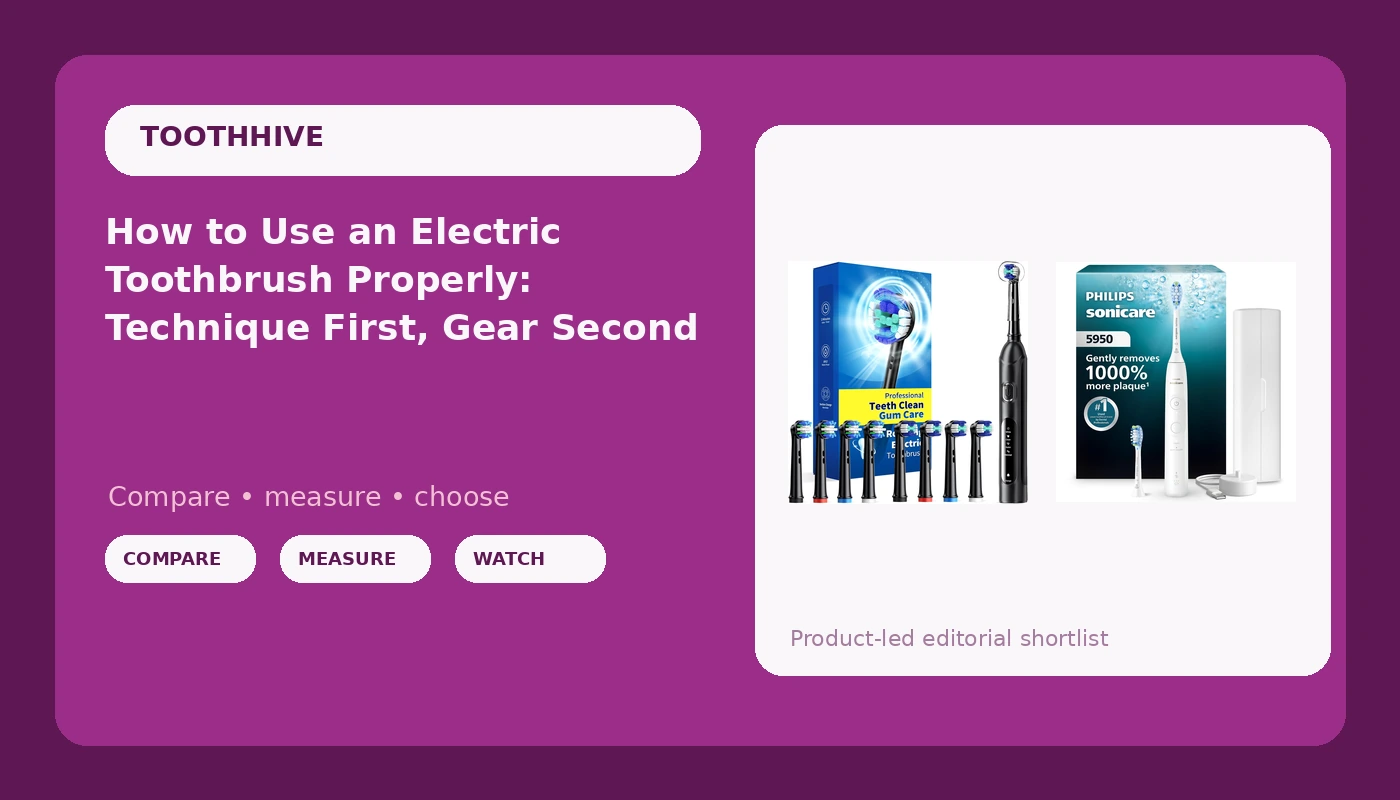
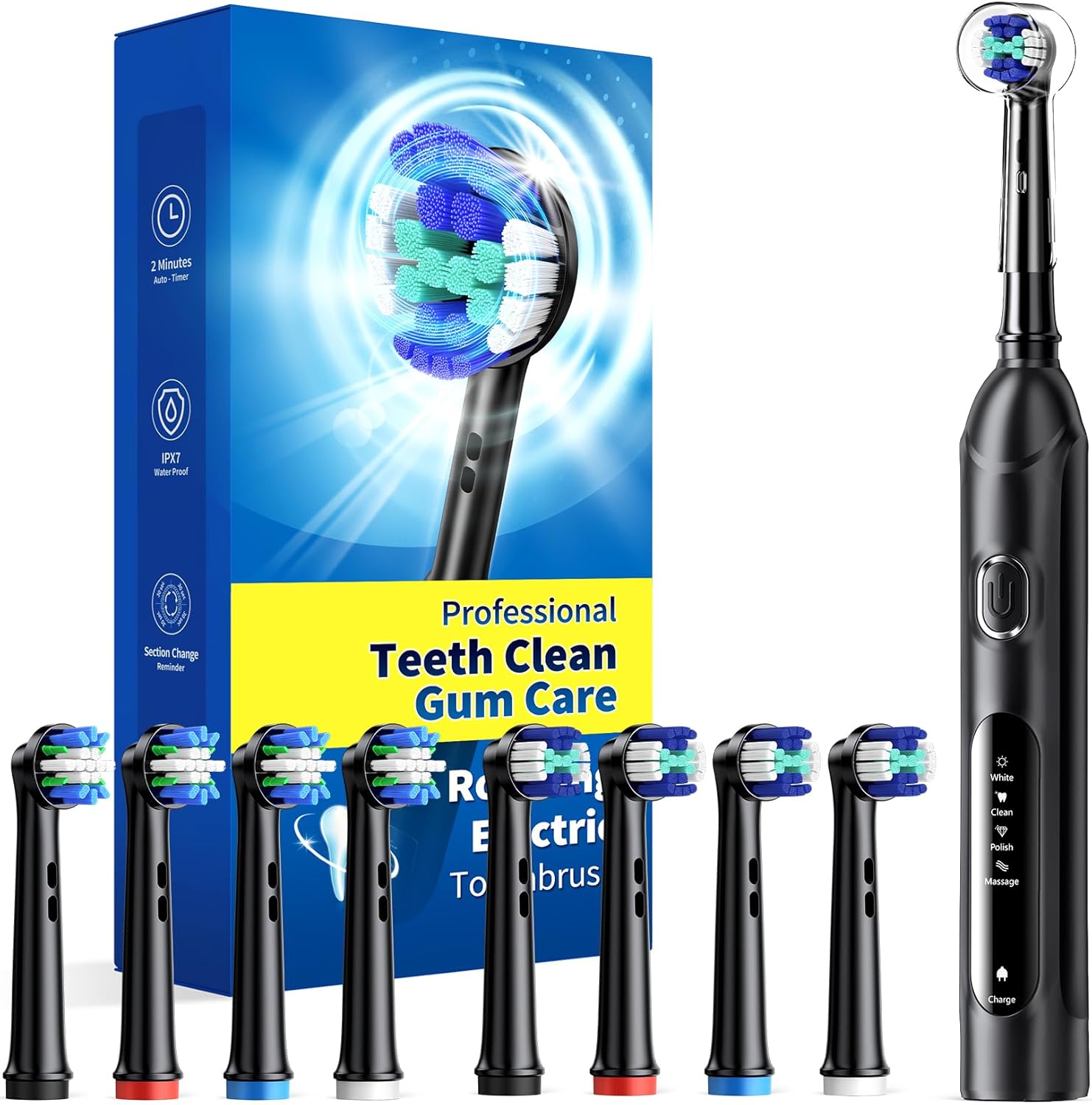
Budget pick: Rotating Electric Toothbrush for Adults, 8 Heads 2 Types, 4 Modes, Black
 Visit on Amazon →
The reason this one makes the list is the head math. You get eight heads in two different types, which covers roughly two years of brushing at the three-month replacement schedule, and that changes the whole cost picture. Most budget brushes get cheap by charging you premium prices for refills. This one front-loads the heads, so the ongoing cost drops to nearly nothing for a while.
The four modes give you a normal cleaning setting plus a couple of softer options, which matters if your gums are already tender. The black finish hides the toothpaste spatter that turns white brushes gray within a month.
Flaws but not dealbreakers: This is a spinning brush, so it runs louder than a sonic one, and the body is plastic and light in a way that tells you where the money went. Before you commit, confirm on the listing that the timer runs in 30-second quadrant intervals and not just a single two-minute shutoff, because that detail is the difference between a serious brush and a toy. If it only does a straight two minutes, you can still use it well, you'll just have to watch a clock.
Anyone who wants a cheap brush with a long runway of heads, or a second brush for a guest bathroom or a college dorm, should look here first.
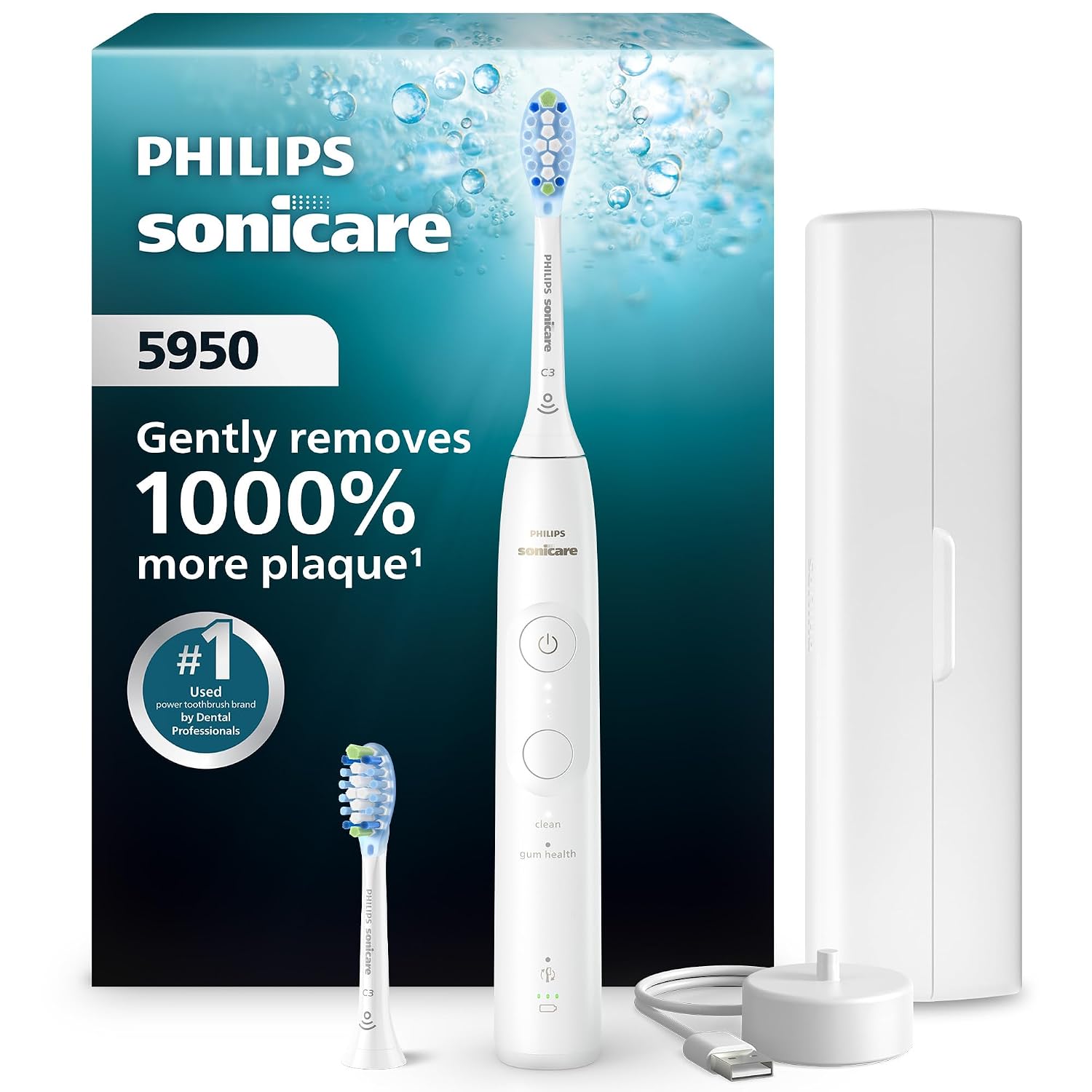
Our pick: Philips Sonicare 5950 Rechargeable Electric Toothbrush, 2 Brush Head, White
 Visit on Amazon →
This is the one I'd hand most adults. It's rechargeable, it ships with two brush heads, and it sits in the Sonicare family where the brand puts the features that actually protect your gums: the two-minute timer with quadrant pacing and a pressure sensor that nudges you when you lean on the brush. Confirm the current spec list on the listing before you buy, since Philips shuffles features between model years and I'd rather you check than assume.
The feel is the real argument for it. Sonicare's vibration is gentler against the gumline than a spinning head, and for patients with recession or sensitive roots, gentler means they stop avoiding the area that needs the most attention. It's also the brush with the widest head availability, so you'll never be stuck ordering refills from one seller.
Flaws but not dealbreakers: You get two heads in the box, not eight, so you're buying refills within about six months. Replacement heads are the quiet cost of every premium brush, and Sonicare heads are not cheap. The body also picks up the white toothpaste film that the black brush above hides. Neither is a reason to skip it.
Anyone who has been told by a hygienist that they brush too hard, or who wants one brush to last five years with easy refills, should start here.
The actual technique: a two-minute routine that removes plaque
Now the part that matters more than either brush. This works with a spinning brush, a sonic brush, or the manual brush in your travel bag. It takes two minutes, twice a day.
Step one: charge it and stop scrubbing. The single biggest mistake I see is people using an electric brush with a manual brush motion. Stop the back-and-forth sawing. The motor is making the circles. Your job is to guide the head to the right place and hold it there.
Step two: divide the mouth into four quadrants. Upper right, upper left, lower right, lower left. Thirty seconds each. That's what the quadrant timer is for, and it's why I won't recommend a brush without one. Without the pacing, everyone spends 20 seconds on the front teeth they can see and 5 seconds on the molars they can't.
Step three: angle the head at 45 degrees to the gumline. The bristles should meet the tooth and the gum at the same time. Plaque builds right at that seam, and a brush held flat against the crown of the tooth skips it entirely.
Step four: move tooth by tooth, slowly. Not in big sweeping strokes. Park the head on one tooth for a beat, then walk it to the next. With a spinning head, that means letting the cup of the bristles surround each tooth. With a sonic head, it means letting the vibration do the work while you glide.
Step five: use two fingers of pressure, no more. Hold the brush like a pencil, not like a hammer. If your bristles are splayed flat within a month, you're pressing too hard. This is the whole reason a pressure sensor exists, and it's the feature that saves your gums from recession. Receding gums don't grow back. Enamel you grind away doesn't come back either.
Step six: do the inside surfaces and the chewing surfaces. The inside of the lower front teeth is where I find the most buildup on adults, because the tongue is in the way and people quit early. Tilt the brush vertical and run it along the inside of those front teeth one at a time.
Step seven: brush your tongue or use a scraper. Most of the bacteria that cause morning breath live on the tongue, not the teeth. Thirty seconds, gentle pressure, front to back.
Step eight: spit, don't rinse. Rinsing with water after brushing washes off the fluoride film that's still working. Spit out the excess and walk away. If you need to rinse, use a fluoride mouthwash, not water.
Then clean the head under running water, shake it out, and stand the brush upright so it can dry. Replace the head every three months, or sooner if the bristles are visibly bent. A worn head cleans like a worn-out mop.
Three mistakes that undo a good brush
Scrubbing. Covered above, but it's the number one offender. If you're moving the brush in fast circles by hand, you're fighting the motor and wearing the bristles out early.
Pressing hard because it feels productive. Pressure does not equal cleaning. It equals gum recession and enamel wear. If your gums bleed when you brush, the fix is usually less force and more time at the gumline, not more force.
Skipping the last 30 seconds. Nearly everyone slows down in the fourth quadrant. The lower left molars, or wherever you finish, get the least attention. Let the timer hold you accountable, and if your brush doesn't have one, set a timer on your phone until the habit sticks.
The competition and why it lost
The connected flagships at the top of the market don't make this guide. They clean well, and the pressure sensors on some of them are genuinely good, but you're paying a large premium for an app that mostly exists to sell you heads and show you a smile score. The app is the product in that category, not the brush.
The subscription brushes are a different trap. They're convenient and the heads show up on schedule, but the cleaning is closer to a manual brush with a motor attached, and the per-head cost adds up over years. Convenient is not the same as effective.
And the manual brush hasn't lost. If you brush for two full minutes with proper technique, a manual brush removes a surprising amount of plaque. The reason I still push electric for most adults is simple: the timer and the pressure sensor make good technique automatic, and most of us are not as disciplined as we think we are at 6:45 in the morning.
What this all costs
The purchase price is the easy part, and both brushes above list their current price on Amazon, so check there rather than trusting a number in an article that goes stale. The number that actually matters is the cost of heads over the life of the brush.
Four heads a year is the standard replacement pace. The rotating brush ships with eight heads in two types, which is about two years of brushing before you buy a single refill. The Sonicare ships with two, so you'll be reordering within roughly six months, and Sonicare heads carry a premium because they're the standard everyone stocks.
Spread over three years, the budget brush wins the refill math comfortably, and the Sonicare wins on gentleness and on how easy it is to find heads at any pharmacy. Neither is a bad decision. What's a bad decision is buying either one and then brushing for 40 seconds with a death grip.
Pick the brush that fits your budget, learn the eight steps, and let the timer run. Your gums will tell you in about three weeks whether you got it right, and your hygienist will tell you at your next cleaning. That's the job. The brush was built to do this. Let it.